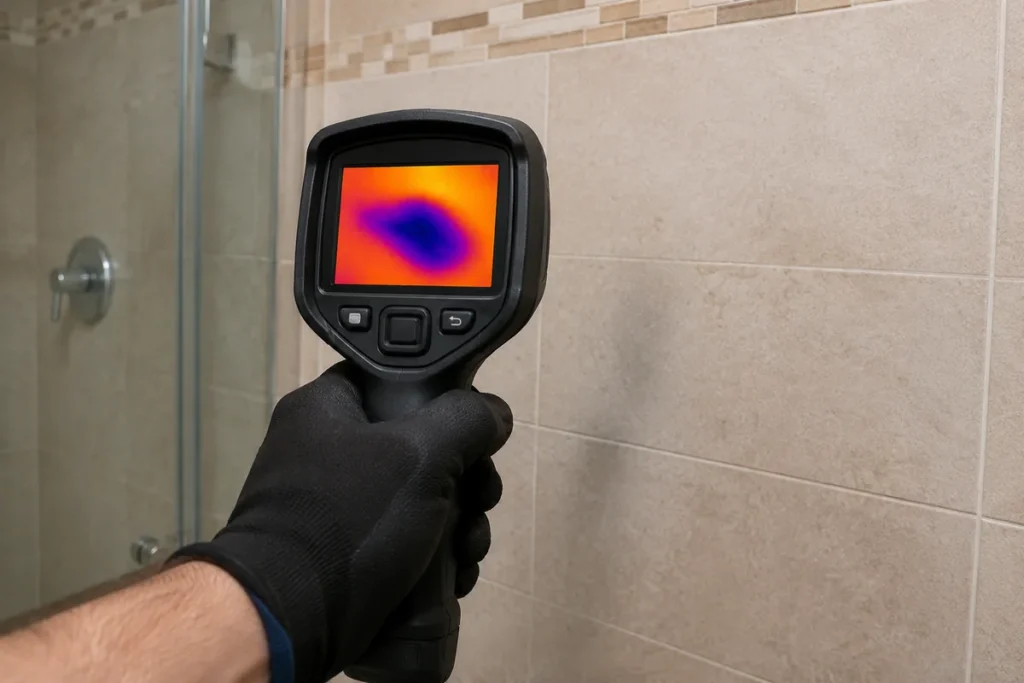
Track how the damp patch changes
Photograph the patch from the same place at different times and record whether it spreads or fades. Include where it is in relation to a sink, shower, pipe access panel or the floor above. If the patch returns after you use a particular fixture, note which fixture and how long it takes to reappear. A dated photo is often easier to interpret than a general description of dampness.
Check what was running before the dampness appeared
Notice whether the issue follows shower use, kitchen cleanup, a washing cycle or a period when nobody was using water. Dampness can come from plumbing, condensation or water traveling from another area. Timing gives the technician a clue about which connections or nearby sources to assess first. Avoid making cosmetic repairs before the source is understood.
What the symptoms can tell you
| Clue | Useful next observation |
|---|---|
| Dampness increases after a shower | Record which shower was used and where the patch appeared |
| Dripping occurs without recent fixture use | Note the time and whether nearby appliances may run automatically |
| Your dedicated meter changes unexpectedly | Record the time and any appliances or tanks still connected |
| A ceiling patch also appears in another flat | Tell maintenance which units or floors are affected |
Use the water meter as one clue
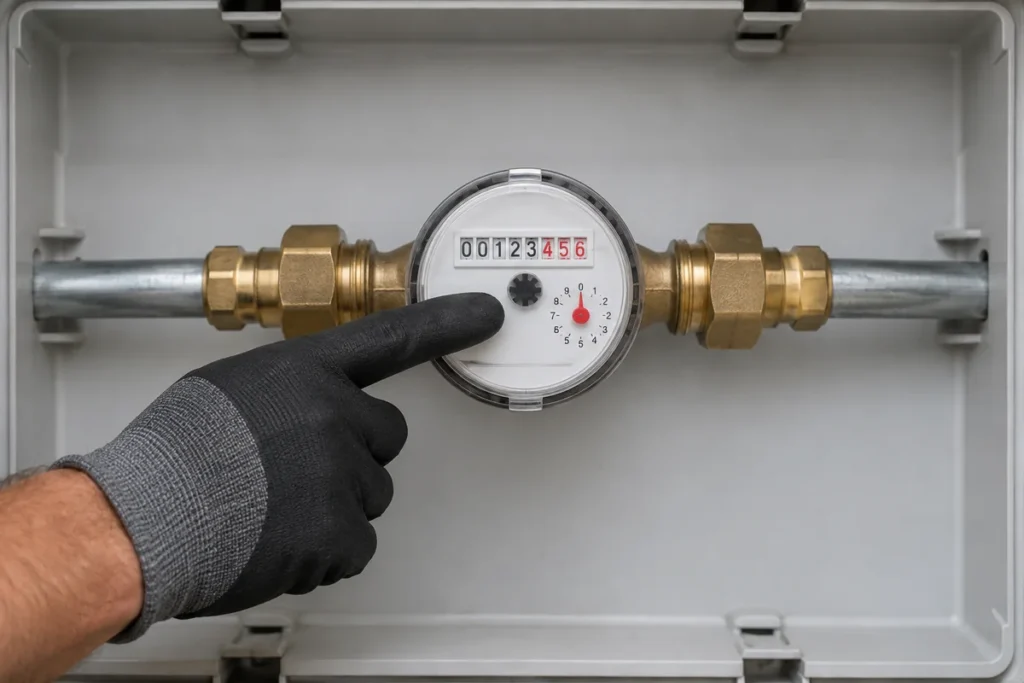
If you have a meter dedicated to your home and can read it safely, record whether it changes during a period with no intentional water use. Consider appliances or tanks that may refill automatically. A change is a reason to investigate, and a still meter does not rule out intermittent or drainage-related leaks. If the meter serves the whole building, ask maintenance who can provide useful readings for your unit.
Give the technician a clear description
Share your area, block, property type and the location of any dampness. Include the dates of recent plumbing work, when the drips appear and whether the issue changes with fixture use. Tell the technician if access to a riser, service cabinet or neighboring space depends on building maintenance.
Ask how the source will be confirmed
Ask which visible fittings or lines can be checked and which parts may need further access. If a repair is proposed, ask what will be checked afterward to see whether the leak has stopped. Photographs taken before and after the repair can help you track whether the damp area is drying or whether new moisture is appearing.
Frequently asked questions
Does a damp wall always mean a pipe is leaking?
A damp wall can have several causes. The location, timing and nearby fixtures help guide inspection.
Can water show up away from where it started?
Yes. Water can travel before it becomes visible, so report where you see it and any nearby plumbing on or above that level.
What should I photograph?
Photograph the whole area and a closer view of the patch or drip. Save the date and note what fixtures were recently in use.
Does a still water meter rule out all leaks?
An unchanged reading does not rule out a leak that appears only during fixture use or involves drainage.
Who should I notify if water appears on a shared ceiling?
Contact building maintenance and tell them your unit and the position of the dampness. Ask who can arrange access if another unit or a shared line needs checking.
Related services
See more practical plumbing guides. Back to the blog