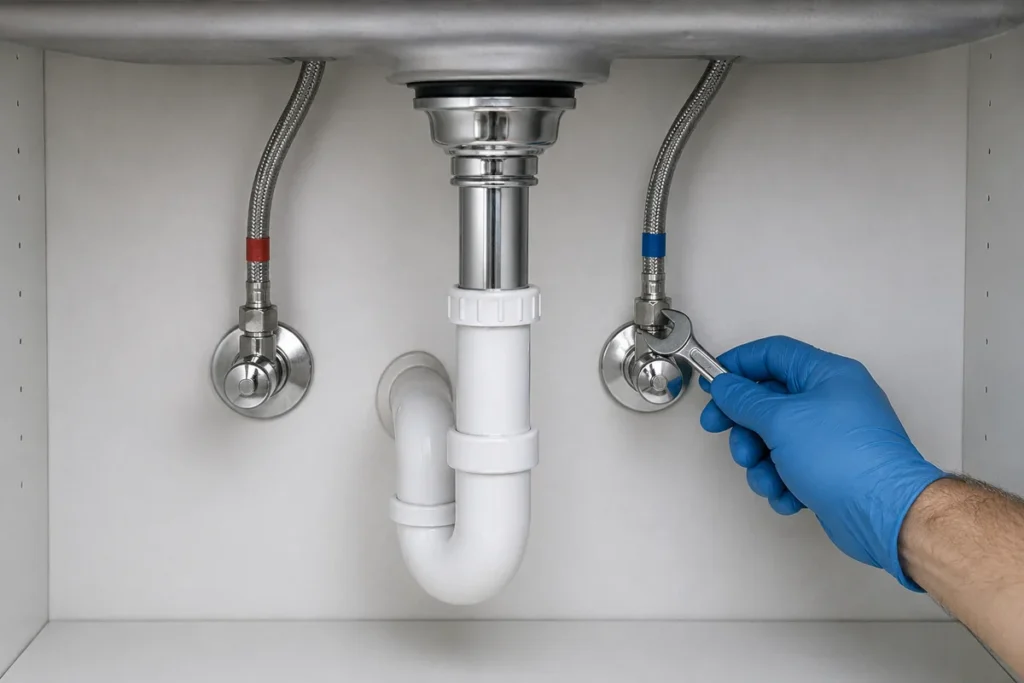
Start with the fixtures that are affected
Look for a repeatable pattern in ordinary use. Does one bowl of a double sink drain slowly, or do both bowls fill together? Is the problem limited to the kitchen, or have you already seen bubbling or backup elsewhere? Note which fixture was in use when it happened. If water is already backing up, stop using the affected fixtures and describe what you saw instead of trying to recreate the backup.
Why a clog can return
Opening a path for water can improve drainage temporarily while material remains elsewhere in the line. Grease and food residue can also build up again during normal use. When the same fixture slows repeatedly, share how soon the problem returns and what was done on previous visits. If several fixtures are affected, mention this before the plumber arrives so the inspection can consider a shared section of drainage.
What the symptoms can tell you
| What you notice | What to report |
|---|---|
| Only the kitchen sink is slow | Which bowl is affected and how long the water takes to drop |
| Both bowls fill when one drains | Which bowl was in use and where water reappeared |
| Other fixtures gurgle or back up | Name each fixture and report the sequence |
| Drainage improves and then slows again | Record the date of previous work and when the issue returned |
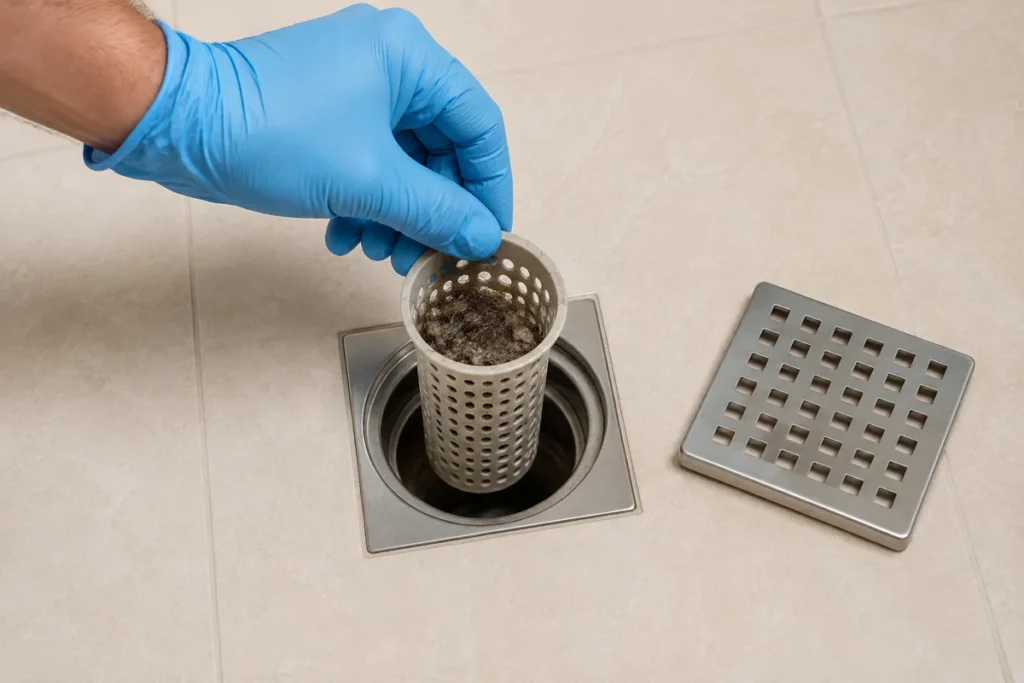
What to write down before requesting help
Record when the sink first slowed, how often it recurs, whether a second bowl or nearby drain is affected, and whether there is a smell, a gurgle or visible backup. If you already used a drain product, give the product name and approximate time of use. Provide your area, block and building or villa number when asking about an appointment.
Habits that reduce waste entering the drain
Use a sink strainer to catch food scraps, empty plates into the bin and collect cooled cooking oil in a suitable container for disposal. Wipe heavy grease from pans before washing. If the drain continues to slow under ordinary use, report the pattern rather than relying on an increasingly frequent temporary fix.
What to ask during the visit
Ask which fixture or section was inspected, what the proposed work covers, and how drainage will be checked afterward. If the kitchen sink shares an outlet with another fixture, mention that before work starts. An accurate description of the affected outlets can help the technician consider the whole problem at the first inspection.
Frequently asked questions
Why does my sink drain normally for a few days and then slow again?
A restriction may still be present, or material may be building up again. Note how quickly the problem returns and any earlier work.
What does water rising in the other bowl tell me?
The two bowls can share part of the drainage route. Tell the plumber that using one bowl affects the other.
Should I mention that the bathroom drain also gurgles?
Yes. Identify every affected fixture and when the sound occurs. A second fixture can help narrow down where to inspect.
What should I send on WhatsApp?
Send your area, block, the affected sink or drains and whether water is slow to empty or comes back up.
Should I tell the technician I used a drain product?
Yes. Tell them the product name and when it was used before they inspect or handle the affected drain.
Related services
See more practical plumbing guides. Back to the blog